Sunday, September 25, 2011

Under the Overpass

I waited at a stop light in a rust-belt town last week, squinting into the hazy sun and staring thoughtlessly at the overpass ahead.

To my unconscious mind, it must have looked like any other riveted steel tunnel in America; I didn't notice the details.

Looking through the bug-spattered windshield, a freight train began passing overhead - which was interesting enough for a picture, which I deftly took and e-mailed to myself.

Only after I saw the digital version of the setting could I see it with a different perspective.

We've been conditioned to associate "urban" with grungy and cool; active and exciting.  Bars, restaurants, night life.  Starbucks and night classes. Transportation.  Ethnicity, diversity.

Urbanites ignore panhandlers and street cons.  They don't see the traffic or pollution or construction; all are necessary evils.  The sounds of ambulances and police cruisers are just a frenetic background, although mostly unheard, to the excitement of city life.

The urbanophile will preach the benefits of living in the foreground - of fostered individuality within a shared and diverse society.  There, in the foreground, you can become John Travolta swinging paint cans and hips on a city street to the music of Stayin' Alive.  You can become self-actualized by teaching in city schools, walking a police beat, or by working at a methadone clinic (one was right across the street from my hotel this week).

But behind that veneer of trendiness and ideology, there is a decay.  A decay of sagging and naked wires strung low between tilted poles. Of vestigial, forgotten construction projects marked by fading orange cones and potholes.

And there are parades of billboards that showcase vast moral and social erosion.  Stopping racial crime, hiring an accident lawyer, fixing a credit score, or testing baby DNA to get the daddy to pay up.

And other signs.  For sale signs.  Empty storefronts. Abandoned homes, lines for shelters.

We need better places to live better lives.  Places where people can see not just the promise of the future, but the goodness of today.

We have too many weeds, too much rust, and sadly, too much resignation and acceptance.  The half-dead infrastructure is as despairing as the new generation of the homeless and the masses of the unemployed .

Will the next stimulus, with it's new wave of shovel-ready projects, begin the renewal?

Can the urban psyche even be repaired?  Or, will the next immigration movement come not from Mexico or Europe, but from the eroding towns in Ohio, Michigan and Illinois to places of hope in Texas and Florida?

Or, there's another option - and it requires no money and no commitment: stand under a decaying overpass in a cloud of diesel fumes and lead paint.

And act like it's glamorous to be today's urban yuppy.


Saturday, September 24, 2011

Teen-Blaine and the Escape of the Sane


Teenagers.  Seriously God, what were you thinking?

Maybe the explanation is that it's a divine but careless chemical experiment.  Someone stacked too many beakers of combustible hormone cocktails - in a meth lab - and right over a fault line - and the next emotional tremor is going to shake the room and tip all those chemicals into a giant mixing vat.

When that happens, the synapses snap into an ADD-like frenzy of neuronic activity.   While mine are erratically sparking like your grandpa's old lawn mower, theirs are red-bulling and overflowing in Niagra-like torrents of ones and zeros.  Mine are pausing on whether to choose regular or decaf.

Feeding hormones into the teen brain is like buying every twelve-year-old a new yellow Camaro, throwing them the keys, and saying, "I bet you can't get that thing over 90."  I mean, whoever set this thing up could have just used a little restraint.

“They are a plague upon humanity,” I lament, exhaling and complaining to my wife, who is more skilled with 10-somethings than I am.

Yeah, I know, it's only temporary.  I can see the horizon, and, although distant, it looks like a teen-free Camelot.  Until then, I can only watch for the Monty Python weight to fall from the sky - and seek escape into my underground bunker.

An escapist's world of cowboys and Jack Reachers. Of UFO's and ghost podcasts. 

I can escape.  But I can't win.

Because my teens have used their Dr. Evil minds to develop an amazing skill; a David Blaine-like sleight of hand.  The ability to make responsibilities disappear like doves into top hats.  To put your account number on their overdrawn bank statement.  

The trick is to make a typical teen problem, let's say - hmmm - an I-phone dropped into the pool, a speeding ticket, a suspicious substance, a bad grade, an emotional outburst, a general (and common) lapse in common sense, a bad attitude, etc. – not really their problem.  

During the discussion, the object of discussion begins to blur.  Mesmerized, the simple adult's eyes are drawn to a fancy silk handkerchief waved by the teen.  As the distraction is regarded, the real problem disappears.  From the silk, out pops a rabbit.   A cuddly little rabbit which further diverts the attention of the audience. 

Now, somehow (although no-doubt facilitated by hormones and energy drinks) the focus is switched to the parent - who until then had merely been the observer of the problem.  The magician now has a rube volunteer take the stage in his place - to be sawed in half or to climb into a box through which sharps swords will be driven.

The teen and the adult's positions are now reversed, and the observer's own actions are placed on the scales of justice.

This illusion is all the work of the magical teen-Blaine, who abruptly vanishes in a column of fog and is transported from stage to audience.  

Now, justice is measured by the audience – has there been fairness, impartial temperament, rationality, and adequate sympathy?  Is the observer even capable of meeting the high standards expected by the audience?  What about the observer's gestures?  Eye movements?  Vocal tone?  Were there hidden meanings behind the observer's choice of words?  And so on. 

The audience seems to agree, and settles upon the just vindication of the teen.

But now there is a growing rumble off stage.  The audience feels that somehow, the observer has caused this problem in the first place.

I have?

Wow. 

Time to escape to my ghost stories and crop circles.  Or maybe that 3-hour podcast on the Kennedy assassination.

Just like me to walk away from my troubles.

Sunday, July 10, 2011

Time Traveler

The south Florida afternoon sun bore down upon us, and it followed us as we made our way across the asphalt of the parking lot.  Humid drafts of tropical air steamed off the baking pavement.  On waves of convection, they carried the sultry scents and sounds of summer.  Pine and citrus and grass.  Melting tar.  Voices and birds and crickets.

It made me think of other suns.  The suns of Rudyard Kipling in Bombay.  The blanched whiteness of suns in black and white photographs.  Parching tough-guy suns along cowboy trails in Tuscon.  Torrid tropical suns in Houston and Galveston and New Orleans.  Like Hollywood sets, set in time and illuminated by the feverish flash bulbs of rays long fallen and forgotten.

The same sun that drives the cycle of days, of years, of instance and infinity falls on me now.  I squint past the cars and shopping carts.  I imagine these rays falling in this same spot when it was filled with Palmetto and scrub, live oak and lizard.  And before that, Calusa, in this same oven-like space, sweltering on this same spot, squinting like me, smelling citrus and sweet grass.

It is a feeling of resonance, of self, of existence.  Of a moment.  A metaphysical realization. 

This time, this now, is as temporary and fleeting as the neon green ferris wheel that once stood here, stretching into the Florida night sky, on the gravel and shell; corn dogs and music and summer blue dresses. 

I remember other spaces under this same sun, with the bright intensity of that moment in time; ageless in memory - yet somehow sad with the recalling.   Squinting across dusty baseball diamonds and smelling the freshly cut outfield grass - times when my boys were mine, fully and deeply, with heart and soul.  Sitting in sandboxes and listening to cicadas, surrounded by barbie dolls and summer slip and slides. 

A squint, a focus, a memory, a stirring of the soul.

These feverish rays define our days, our seasons, our lives.  As I feel them, they remind me of other suns on other days.

Sunday, May 29, 2011

Vincennes Avenue to Omaha Beach - the 116th on D-Day, June 6th 1944

The picture below is of August William (Bill) Diedesch, taken outside his family's home on Vincennes avenue.  He was my father's uncle. 

Around the time of this picture, he would sign up for the reserves.  His unit was called to active duty and they were fatefully assigned to Bradley's force for the action on June 6th, 1944.

August was assigned to the 116th Division, 29th regiment. 

The following is an excerpt from a story in the 1960 Atlantic Magazine, which chronicles the fate of that division as they landed on the beaches of Normandy in the first wave of the assault.

In everything that has been written about Omaha until now, there is less blood and iron than in the original field notes covering any battalion landing in the first wave. Doubt it? Then let's follow along with Able and Baker companies, 116th Infantry, 29th Division. Their story is lifted from my fading Normandy notebook, which covers the landing of every Omaha company.

ABLE Company riding the tide in seven Higgins boats is still five thousand yards from the beach when first taken under artillery fire. The shells fall short. At one thousand yards, Boat No. 5 is hit dead on and foundered. Six men drown before help arrives. Second Lieutenant Edward Gearing and twenty others paddle around until picked up by naval craft, thereby missing the fight at the shore line. It's their lucky day. The other six boats ride unscathed to within one hundred yards of the shore, where a shell into Boat No. 3 kills two men. Another dozen drown, taking to the water as the boat sinks. That leaves five boats.

Lieutenant Edward Tidrick in Boat No. 2 cries out: "My God, we're coming in at the right spot, but look at it! No shingle, no wall, no shell holes, no cover. Nothing!"  His men are at the sides of the boat, straining for a view of the target. They stare but say nothing. At exactly 6:36 A.M. ramps are dropped along the boat line and the men jump off in water anywhere from waist deep to higher than a man's head. This is the signal awaited by the Germans atop the bluff. Already pounded by mortars, the floundering line is instantly swept by crossing machine-gun fires from both ends of the beach.

Able Company has planned to wade ashore in three files from each boat, center file going first, then flank files peeling off to right and left. The first men out try to do it but are ripped apart before they can make five yards. Even the lightly wounded die by drowning, doomed by the waterlogging of their overloaded packs. From Boat No. 1, all hands jump off in water over their heads. Most of them are carried down. Ten or so survivors get around the boat and clutch at its sides in an attempt to stay afloat. The same thing happens to the section in Boat No. 4. Half of its people are lost to the fire or tide before anyone gets ashore. All order has vanished from Able Company before it has fired a shot.

Already the sea runs red. Even among some of the lightly wounded who jumped into shallow water the hits prove fatal. Knocked down by a bullet in the arm or weakened by fear and shock, they are unable to rise again and are drowned by the onrushing tide. Other wounded men drag themselves ashore and, on finding the sands, lie quiet from total exhaustion, only to be overtaken and killed by the water. A few move safely through the bullet swarm to the beach, then find that they cannot hold there. They return to the water to use it for body cover. Faces turned upward, so that their nostrils are out of water, they creep toward the land at the same rate as the tide. That is how most of the survivors make it. The less rugged or less clever seek the cover of enemy obstacles moored along the upper half of the beach and are knocked off by machine-gun fire.

Within seven minutes after the ramps drop, Able Company is inert and leaderless. At Boat No. 2, Lieutenant Tidrick takes a bullet through the throat as he jumps from the ramp into the water. He staggers onto the sand and flops down ten feet from Private First Class Leo J. Nash. Nash sees the blood spurting and hears the strangled words gasped by Tidrick: "Advance with the wire cutters!" It's futile; Nash has no cutters. To give the order, Tidrick has raised himself up on his hands and made himself a target for an instant. Nash, burrowing into the sand, sees machine gun bullets rip Tidrick from crown to pelvis. From the cliff above, the German gunners are shooting into the survivors as from a roof top.

Captain Taylor N. Fellers and Lieutenant Benjamin R. Kearfoot never make it. They had loaded with a section of thirty men in Boat No. 6 (Landing Craft, Assault, No. 1015). But exactly what happened to this boat and its human cargo was never to be known. No one saw the craft go down. How each man aboard it met death remains unreported. Half of the drowned bodies were later found along the beach. It is supposed that the others were claimed by the sea.

Along the beach, only one Able Company officer still lives -- Lieutenant Elijah Nance, who is hit in the heel as he quits the boat and hit in the belly by a second bullet as he makes the sand. By the end of ten minutes, every sergeant is either dead or wounded. To the eyes of such men as Private Howard I. Grosser and Private First Class Gilbert G. Murdock, this clean sweep suggests that the Germans on the high ground have spotted all leaders and concentrated fire their way. Among the men who are still moving in with the tide, rifles, packs, and helmets have already been cast away in the interests of survival.

To the right of where Tidrick's boat is drifting with the tide, its coxswain lying dead next to the shell-shattered wheel, the seventh craft, carrying a medical section with one officer and sixteen men, noses toward the beach. The ramp drops. In that instant, two machine guns concentrate their fire on the opening. Not a man is given time to jump. All aboard are cut down where they stand.

By the end of fifteen minutes, Able Company has still not fired a weapon. No orders are being given by anyone. No words are spoken. The few able-bodied survivors move or not as they see fit. Merely to stay alive is a full-time job. The fight has become a rescue operation in which nothing counts but the force of a strong example.

Above all others stands out the first-aid man, Thomas Breedin. Reaching the sands, he strips off pack, blouse, helmet, and boots. For a moment he stands there so that others on the strand will see him and get the same idea. Then he crawls into the water to pull in wounded men about to be overlapped by the tide. The deeper water is still spotted with tide walkers advancing at the same pace as the rising water. But now, owing to Breedin's example, the strongest among them become more conspicuous targets. Coming along, they pick up wounded comrades and float them to the shore raftwise. Machine-gun fire still rakes the water. Burst after burst spoils the rescue act, shooting the floating man from the hands of the walker or killing both together. But Breedin for this hour leads a charmed life and stays with his work indomitably.

By the end of one half hour, approximately two thirds of the company is forever gone. There is no precise casualty figure for that moment. There is for the Normandy landing as a whole no accurate figure for the first hour or first day. The circumstances precluded it. Whether more Able Company riflemen died from water than from fire is known only to heaven. All earthly evidence so indicates, but cannot prove it.

By the end of one hour, the survivors from the main body have crawled across the sand to the foot of the bluff, where there is a narrow sanctuary of defiladed space. There they lie all day, clean spent, unarmed, too shocked to feel hunger, incapable even of talking to one another. No one happens by to succor them, ask what has happened, provide water, or offer unwanted pity. D Day at Omaha afforded no time or space for such missions. Every landing company was overloaded by its own assault problems.

By the end of one hour and forty-five minutes, six survivors from the boat section on the extreme right shake loose and work their way to a shelf a few rods up the cliff. Four fall exhausted from the short climb and advance no farther. They stay there through the day, seeing no one else from the company. The other two, Privates Jake Shefer and Thomas Lovejoy, join a group from the Second Ranger Battalion, which is assaulting Pointe du Hoc to the right of the company sector, and fight on with the Rangers through the day. Two men. Two rifles. Except for these, Able Company's contribution to the D Day fire fight is a cipher.

Uncle Bill, we remember you and thank you - and all of the 116th.

Monday, April 4, 2011

Could a Cloud

Could I have met you
drifting and forming
far away, formal
not close up, transparent

I imagine you
there and not there
one moment a profile
one moment a longing
at the edge of existence

I could paint a picture of you
maybe asian, exotic
off a stark country cliff
above the French sea

In china white pigment,
you'd be watery and wistful
a cerulean blue tint
soft shades of grey

Then you'd change in the twilight
turn neon and crimson
purple and passionate,
flaunting your beauty
waiting for night

But could a cloud
be a you
immeasurable
intangible
known and unknown
blurred at the edges

Could a cloud
be a you
and are you what I thought I saw then
when I was a speck
and you were the sky?

Friday, April 1, 2011

Cubbie Blues

Is the season over yet?
They lost again this noon
perished in the April cold
and Wrigley Field spring gloom

A grand slam but it's the other team
four more on the board
the Pirates served their pennance
and the Cubs are their reward

What we need now is a hero sort
to stop this juggernaut in reverse
this Addison addiction
this century long Clark Street curse

OK, the fans, they may not notice it
or anyone taking Prozac
but we're back down in the cellar now
and in my house we all know that

So before ivy leaves turn green
let's get him on the phone
get a blue Cubs pen and sign him up
my hero, Joe Pepitone

Tuesday, March 29, 2011

If I could catch it

In a craft made out of willow reeds
under grey skies, clouds opaque
we sailed upon new spring waves
an equinotical vernal date

Our souls together thus were borne
on drafts of wind unseen
warmed by love and innocence
in the temperate seas of spring

I thought if I could catch it then
in words I could express
I could give it to you endlessly
but its essence would not be etched

We float instead, past flotsam memories
past old Riley, with his rake
past crumbling limestone yesterdays 
and garden lives that once were great

Past growing things and summer vows
in a garden, in a church
in the seedings and the rootings
pasts and presents are converged

We float across the yellow green
then forsythia waves of gold
and see rich jeweled islands cobalted blue
just emerged from winter's cold

There, a flock of new magnolias
perched on a twisted old green fence
poise their pink wings to fly away
perfumed and intense

The lockers locks de-iced
hyberbation thawed
there’s a leaping of our hearts
a joy that winter stalled

Shedding hats and gloves and woolen coats
back to our new selves underneath
we smell the smell of leather gloves
then our selves are more complete

A parrot green with eyes of orange
has a key now in his beak
to a safe that holds a telescope
to see things once oblique

A squinted eye held to the scope
old dolls lost are seen again,
pony tails and pink ribbons
reunited childhood friends

There’s your birthday dress,
with its ruffled top, mom put it on your bed
your friends are coming over soon
for spring happiness again

Do you see your favorite album?
it’s fifties, no it’s rock
it’s Simon and it’s Garfunkel
it’s Cowsill family pop

Now a shimmering spirit
a soothing birthday potion
from dandelions and cherry blossoms
bittersweet and potent

We slip into Jacob's forest now
a shadowed Sherwood in her backyard
to sneak in and make a real faux camp
I’ll give you a head start

We’ll see cardinals, larks and blue jays
as they dance around the trees
disappointments don’t exist there
only inner peace

Squirrels, raccoons and grapevines
tea parties, rabbit holes
you’re alice in her looking glass
watching mysteries of the soul

The captain sends you to the crow’s nest
to spy for trains down at the corner
we close our eyes and listen
from you, our sole reporter

It’s the soothing of the railroad sounds
steaming brakes and clanking steel
cityscapes and city sounds
iron ships without a keel

You spy the station wagon
in the driveway, an old ford
In 70’s rides you saw the police
until the Wright’s they were ignored

I see you on your birthday then
and you’re tender, young and pretty
you’re holding your little sisters’ hands
Goat and Meg and Sticki

If it’s not like this now then you’ve just made things up
in the intervening years
spring is always out there
and won’t ever disappear

Like how I saw you in the kitchen
with all your still best friends
bell bottoms, beads and peace signs
none have ever reached an end

And in places there on Bell and Hoyne
you’re still holding hands with the girls
but your hands to hold have multiplied
like sparkling family pearls

Our ship lifted off and took to the sky
its great white sails unfurled
our captain pointed to a southern point
and gave the wheel a twirl

We moved up through the giant oaks
toward their ancient towering arms
they protected all our growing up
and kept us all unharmed

We sailed then almost aimlessly
we turned and lurched and twisted
as the captain threw the anchor out
I thought we almost missed it

But we floated up there in the sky
and I recognized the space
a sacred mission, a sacred heart
a childhood holy place

You looked down through your telescope
and saw yourself down there
white gloves and white dress
spring flowers in your hair

And you felt it then and you feel it now
with borchardt in the garden
and the next one there that would heal your soul
when you needed that department

We waved at you and you looked up
and the sailboat lifted us together
and the spring songs floated up to us
and they’ll be with us for - forever

Thursday, March 10, 2011

The goats on your birthday

To-daay-aay-aay-aay on your birthday,
the mountain goats bleated
we two discussed
just what you needed

The Birthday Bird, as usual,
was no help at all
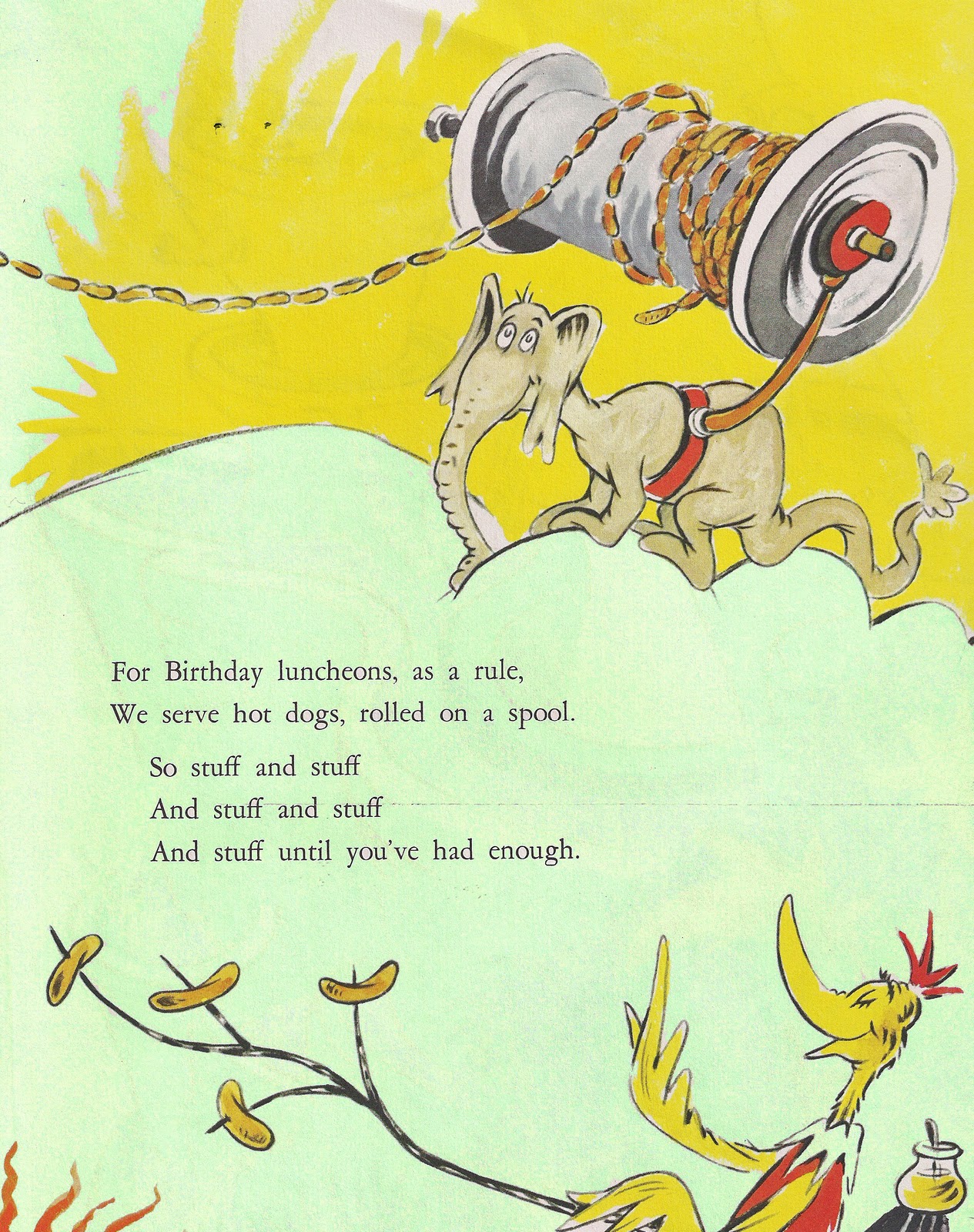
just hot dogs on spools
and jumps from high waterfalls

The tall blue-green pets
from the Katroo pet department
well, they’re too fluffy and tall
for a Manhattan apartment

The deep sea divers, Getz and Gitz
suggested a time-telling fish

But with clock-keeping problems
of burping and napping
we re-ee-ee-eealy can’t see
a ticking fish happening

How about a gift card
from Wesley Ballou’s?
a health food boutique
in downtown Katroo…

They have cakes by the Snookers
and beer by the Trappists
And jellied green eel
in gold metal wrappers

Or deep-sleeping darts
To throw at the baby
Eighty minutes of bliss (assuming good aim)
and guaranteed Katroo safety

A pa-a-a-alm-reading session
from the gypsies in town?
On second thought,
you should turn that one down

You might get the blues
if they looked at your hand
and saw te-ee-ee-enage years
you’d have to withstand

We couldn’t bu-uy-uy you a jersey
of the Mets or the Yanks
but might spring for a tee-shirt
of the Katroo Fighting Francs

So really, we’re back
to the ho-o-o-ot dog event
a Birthday Bird favorite
with little dissent

A spe-eh-eh-cial birthday lunch
a meal, seven course (all dogs)
but with a new twist,
we’ll make it veggie - of course!

And then we'll wash Katroo mustard
with a dive in the pool
and the goats can climb rocks
and eat hot dogs off spools

Happy Birthday!!!!!

Monday, February 14, 2011

My kind of rain

She's my kind of rain

Like love in a drunken sky
She's confetti falling
Down all night

She sits quietly there
Like water in a jar
Says, Baby why are you
Trembling like you are

So I wait
And I try
I confess like a child
She's my kind of rain

Like love from a drunken sky
Confetti falling down all night
She's my kind of rain

She's the sunset's shadows
She's like Rembrandt's light
She's the history that's made at night

She's my lost companion
She's my dreaming tree
Together in this brief eternity

Summer days, winter snows
She's all things to behold

She's my kind of rain
Like love from a drunken sky
Confetti falling down all night
She's my kind of rain

So I wait
And I try
I confess all my crimes

She's my kind of rain
Like love from a drunken sky
Confetti falling down all night
She's my kind of rain

Oh, rain on me

On Valentines Day 2011

Lyrics: Tim McGraw Set This Circus Down

Saturday, February 5, 2011

Ode to the magical cat

A wispy grey kitty
in a gypsy box kiosk
a tea party granny
in a tabby grey dress

but once a new baby
a campus cat princess
a college co-ed girfriend
all fancy and frisky

Our bff best bud
In dorm rooms, apartments
backyards and bedrooms
winters and summers

when it wasn't so crowded

we were together
me a Chinese waitress
and you Cinderella

then a cherished cheshire
a cheese-head bret favre girl
sleeping and dreaming
with barbie and friends

scratch my chin here
rub my head there
and you'll see my paw thumping
up and down in the air

Frankie we'll miss you
our girl with a boy's name
Our little Miss Magic
we'll be wishing to you

Monday, January 31, 2011

Hot dogs, on a spool

You must be mistaken
red headed young lassie
you got the dates wrong
from your mommy and daddy

You're two days past due
the 31st is much later
then when I first saw you
in that pink incubator

So go tell your brother
our Sonoran-like cook
he can look it all up
in his chemical books

And tell your plump sister
expecting and dizzy
baby T got it wrong
well, we know she's been busy

Your birthday's been ended
two days it's been past us
the baloons are all popped
shrunken and gas-less

but it was fun one, out here in Florida
we had a big cake, a big chocolate torte one
we sang happy birthday and jumped in the pool
and ate birthday bird hot dogs, right from the spool

Happy Birthday Meg!


*****

Nobody gets too much Heaven no More

What if I told you That the best days are summer days – And that when I think of you, I remember  Pedaling down Longwood Drive, on our Schwi...