Thursday, November 25, 2010

Thanksgiving redux

In the Turquoise Pencil world, a strange summer has morphed into an impossible autumn.  Here, soap opera scripts are played out daily. 

The most recent plot developments have our cast of characters scattered across distant locations, and the family lens is ready to flip back and forth between venues like a Discovery Channel Storm Chaser reality series. 

Our characters are emerging from their home grown storm-chasing mobiles, breathlessly marveling at their narrow escape. 

Here, the Thanksgiving winds have blown the sky into a wispy and transparent cerulean blue.  If there are clouds, they can only be seen by squinting into the distance.  

Ahead, there are new adventures and different challenges, no less exhilirating and rich.

I think perhaps our Edwardian and Victorian holidays may be receding into the past.  We've started to blend old traditions with new ones.   The emerging traditions, for now, seem to be more diverse - an ecclectic cocktail of palm trees and Manhattan taxis, Minnesota lakes and Indian Reservations.   The Batman Park and the Gulf of Mexico intercoastal waterways.

It feels good.  I think I'm ready.


*****

Tuesday, November 23, 2010

Pain

Across the street from the Loyola quadrangle, the familiar sounds from an endless procession of L trains could be heard even inside the classrooms.

The linked-up aluminum cars would brake and screech along the tracks and through the final turn before crawling and hissing into the Loyola station.  Echoes from almost inaudible announcements would bounce across the frozen pavement and against the campus buildings.

Even with a powdery new snowfall, it was a grey world – the platform, the trains, the lives.

At times, the trains seem suspended in the air just above the crumbling overpass. Ambulances would rush underneath, blaring and screaming, ricocheting north or south, destination heaven or hell. Against the broken curbs were a collection of trash and street sludge snow cones.

Beyond the stone buildings that bounded the campus like the walls of a keep, the city streets lurked. Faded billboards stalked Sheridan Road like zombies, with faceless ads about malt liquors or lawyers or paternity. And just a short walk from the holy cathedral of the Madonna, it was too dangerous to be alone, especially at night.

Inside the protected quadrangle, we didn't feel the threats or the taunts of the city.   Instead, we learned of neuroses.

The revelation was in theology (an appropriate place), which was required coursework when studying for the Jesuits.  The revelation was that a normal person is really not normal at all.  If they seem normal - and happy - then they are undoubtedly and successfully neurotic.  They have created a perception of reality that helps them to cope.  They hear sirens but can't feel the trauma. See the billboards but block the messages.

This mental faculty keeps us sane.  It’s like a vestigial sort of mental miracle.  On a daily basis, it softens the sharper edges of reality.  But when life’s pain becomes intense, it can carry us all by itself.  Without it, we might be unable to continue the lives we thought we had.  Without it, we might find ourselves atop a bridge and leaning out - with pain too great to bear.

Perhaps the Jesuits, at times, disguised this miraculous faculty as a Trojan Horse. 

But they know it's faith.  It's God, helping our souls carry burdens too heavy for us to lift by ourselves.

Maybe one day, you'll be riding the L train, feeling a pain you believe has changed you forever.  Hold on tightly as the train screeches and swerves, and nearly throws you from your seat. When the wheels grind to a halt, hurry off the train, down the stairs and across the street.

Step into the quadrangle.

Breathe deeply and feel the gentle snowflakes fall around you.  Listen to the muted sounds of the train as it fades into the distance.  Follow the warm pools of light that fall beneath the familiar buildings.  Feel the comfort of walking with other students toward your dorm and your friends and the life you have known.

Then, look across campus, toward the eaves of the church of the Madonna. 

Feel the pain fade.


*****

Friday, November 19, 2010

A Life Story

In our house on Esmond Street, my mother could be heard calling up the stairs, “Your father’s not going; he’s working on his book today.”

His book. My mother proudly told us that it was going to be a great work of literature, that it would make him rightfully famous. But knowing its ostensible title, the book drew little interest or awe from the group of us, preparing to go to church or the beach or the S&H greenstamps store.

We would leave my father standing in the doorway, his pipe clenched in his teeth and a box of papers under his arm.  A sacrifice for the book.

In the 1960’s, my father could have used the Olivetti from his office for the project, but he wasn’t a typist - he was an artist.  He used fountain pens and bics, legal pads and plain white paper.  

There on Esmond, work on the book had just begun, so we often saw him carrying his box of papers, busy and intent and energetic. Young, tall, and thin.  Unburdened and eagerly anticipating his future as an author and historian.

The box with the loose pages could be found in his studio, among other flotsam and jetsam carried along on his creative river of talent; oil pallettes and canvases, brilliant pools of watercolors drying in plastic pans, and delicately drawn outlines of Chicago homes waiting for the watery touch of his brush. 

His studio resonated with music and smell of Bond Street pipe tobacco.  Visiting his studio, we watched from playpens and highchairs, stools and swing-o-matics. 

We moved from Esmond Street to a tiny brick house on Longwood Drive in Blue Island, where work progressed.  Pipe smoke and inappropriately loud operatic music drifted up from the basement; certain clues that Chicago’s sepia history of barons and brothels and business tycoons was being transcribed.

As he penned those pages in the cramped basement, he was sifting through the rubble of a house on Prairie Avenue, or walking up a grand mahogany staircase with his friend and mentor, whom he told us was part of Lord Carnarvon’s excavation of King Tut’s tomb. John McCormack and Arthur Rubenstein deafened the sound of the babies crying upstairs. It must have seemed like heaven.

We lived in the Blue Island house during the Viet Nam war.  My mother would occasionally have “Viet Nam Dinner” nights for the children.  They featured only rice, odd vegetables, and water. 

We hated it then, but see if differently today.  Now with admiration.  Because now we know of the days my father would come home after selling just a few art supplies or hand-sketched note cards in his gallery.   We’d eat the budget-saving Viet Nam dinners and then my father would head downstairs to work on his book.

The book that would make him famous.

Then, during those tumultuous Blue Island years, history happened.  Men landed on the moon. Martin Luther King and Bobby Kennedy were shot.  Riots erupted across the city, and Daley’s canary blue police served up justice as the fires burned.  And the basement flooded.

Amid the floating boxes and submerged furniture, the pages of the book were saved. I remember seeing a box of rippled and streaked paper and wondering if the book project would survive.  Evidently it did.

Shortly after the flood, we moved into a new house and a new period in our lives. The house was not unlike those featured in the unfinished book. It was a peeling and dilapidated old Victorian, with broken pipes and windows. The high-ceiling rooms had piles of leaves from the oak trees that towered over its three stories. And it seemed like a perfect place to work on the book.  In this new space, our lives felt changed.  Our minds seemed to expand.

And we grew.  Teenagers started appearing.  Braces and new cars were needed.  Our friends gathered in the large kitchen in the house on Prospect Avenue, filling the place with noise and laughter and chaos. We were all swept into our own lives and personal dramas.

We had temporarily forgotten the image of my father standing by the door in our Esmond house, youthful and hopeful, clutching his box of paper.  For the moment, we'd forgotten those hand-written pages, water stained from the flood.

I lost track of the book.

But my father must have kept writing it.

He must have, because today his book, “Chicago's Old Homes - Legends and Lore,” is in its third edition from McGraw Hill.  It’s been sold on Amazon.com and E-Bay.  And I once saw it in a Barnes and Noble bookstore in Florida.

Maybe it didn’t make him a famous author. 

But in my eyes, he acheived fame from another work, yet unpublished but even longer in the making.

Upon endless pages, he has drawn the indelible characters of our family.  He penned each of us imperfectly and yet grandly.  Our minds as big and open and irrational as moving into a house filled with leaves and racoons.  Our souls bathed in the artistic and creative process. 

Thus we became philosophers and scientists, thinkers and writers, musicians and artists.

For this, my father shares the byline.

And now, we are busy writing our own books.

Thanks dad.


********

Friday, August 20, 2010

Corkie, Yorkie, and Cicadas

In Chicago, it was just early August but the dog days of summer had arrived many weeks too soon, along with weather from a Louisiana swamp. Windless and hot, time dragged as slowly as the few molecules of air that blew across the city.

Among the rows of bungalows in Beverly, sprinklers were working hard; spraying comb-teeth waves of water across the browning grass.  And, as afternoon inched forward, the shrill sounds of the cicadas would begin - a deafening backdrop of insect chatter from a million tiny voices that would mercifully drown out the sounds of the city - the sirens and traffic and planes.

This particular afternoon, it was hot.  And boring.

So we sat inside Meg's bungalow on Bell Street, where it was quieter and cooler.  My neice Eliza and my daughter Katie sat cross-legged in front of the sofa next to the coffee table.  Eliza's Barbies were scattered out across the floor.  Sponge Bob was talking to Gary in the background.  The fan pointed up at the ceiling where someone had probably kicked it.  So I curled up in front of it, near Eliza and Katie and the dolls.

Eliza knew about Elizabeth Freckly Dawn Ron, a Barbie from Katie's childhood that was legendary in the Simmerling family.  Dawn Ron was a creation of our imagination, a pretend teenager that overcame her challenges to become an overconfident olympic skater who won the gold medal (under dubious circumstances).  

"Why don't you guys play Barbies?" Meg asked, as Eliza stared in a zombie trance at the television.

"Me?" I asked, yawning.

"Yeah, you two can do a show or something," she said.  Meg probably remembered the dance contests and skating events Katie and I held with Dawn Ron and her friends on our own living room carpeting.  I was a grown man (I think), so it should have been kind of embarrassing.  But Eliza was now snapped out of her trance and latched onto the Barbie idea.

"I don't know, I'm kind of tired from working for the Bobs all day and everything," I said, stretching out and closing my eyes.

"Please, uncle John?"

"Yeah dad, come on, it will be fun," Katie conspired.

So we gathered all the dolls together to get them ready for an organized event, which involved a lot of pulling pants up and dresses down, and un-matting wild hair.  As we sat them in rows, stadium like, I wondered what we could come up with.   I needed some coffee. 

"How about a magic show?" I offered.  That seemed interesting, in a David Blaine kind of way. 

"Cool," Eliza agreed. 
So, as the seating arrangements continued, I asked for the names of the dolls.  While Katie had names for all of her Barbies growing up, Eliza's Barbies were virtually anonymous.  So we had to come up with some stage names.

"Ladies and gentlemen," I announced,  "I'd like to introduce Corkie and Yorkie!"  Picking two dolls (a Ken and Barbie) from the crowd, I dramtically held them up, "And they are starring in the Corkie and Yorkie Magic Show!" 

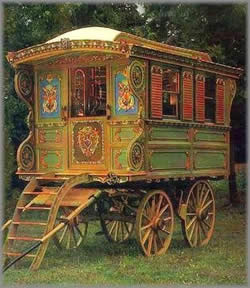
The names were pulled from nowhere, but oddly they had a certain gypsy-caravan kind of feeling.   And with the wild hair and outfits in the crowd, it seemed appropriate.

And with that, the Corkie and Yorkie magic show was born. 

The early acts of the show featured a flashy trick called "The Magic Kimono", where an assistant would be made to disappear from under a large silk robe, but only after the audience was told to close their eyes because of the danger from powerful magical rays.  The assistant would reappear after much backstage talking and arguing - but again only after the audience would obediently close their eyes. 

There was also the popular fortune-telling act (also gypsy-like), where an assistant named "Miss Magic" would answer audience questions about their future.  Unfortunately, the questions were too simple and the answers too vague. 

"What kind of car will I get when I am older?" 

"A fast car - thank you very much," Miss Magic would curtly answer.      

That first afternoon, after the acts had developed, we went into the backyard and cut pieces from a cardboard box, which we used to make props for the show.  As we cut and taped and painted, we laughed about the funny characters and the silly questions.  We made a booth for Miss Magic, which included a sign that read, "Magic Tricks and Good Advice."  Katie made a sign for the Barbie Minivan that said, "Going to the Corkie and Yorkie Magic Show." 

The Magic Show was a hit.  Eliza would do her best to re-create it for other family members, but Katie or I would need to add the bungling and innocent complexity (and humor) that made it so fun.  More props were added, and daily showtimes were posted on the side of the kiosks.

Late one night, I received a text message from Meg, telling me that the audience was now camping out in her living room, waiting to get tickets for the next day's show.  "All these teenagers are sleeping out in my living room," she wrote.  "And I think I smell someone smoking," she added in a later text. 

In daily conversations and texts, we would refer to the different Barbie characters, such as Brian, Chad, Miss Magic, Corkie, Yorkie, etc.  They would be late for work, headed to Great America, in the backyard sitting on the picnic table and smoking, looking for jobs, off at Starbucks, and all the other things teenagers do. 

We laughed about it late at night as we texted each other.  In the mornings, we would discuss the previous night's misbehaviors - how the carnies and the groupies were a bad influence on each other.  I'd drive over to the Gallery and Vicki would be laughing as I walked in - she'd ask for the latest on Corkie and the gang.  If you were in on it, you'd have to help build the story.  So the Magic Show misadventures were as creative as the show itself - and almost as funny.

Like the heat and humidty that hung over the city this summer, our emotions were pressed and twisted and tested in unpredictable ways every day.  But we were lucky, we had each other.  We relied upon each other, learned about each other, and I know we became closer than ever. 

But during those summer days, Corkie and Yorkie also gave us something that we didn't know we needed - an escape.

An escape, like the deafening but welcome sound of the summer cicadas.

**

Thursday, June 10, 2010

On the moon

You know I care for you
But pretend and lead me on, that's all you do
I try to still believe but now I'm through

And the only place I see
is calling out to me
It's the only place I know
It's the place where I must go

On the moon, that's where you'll find me soon.
I'll be alone again
That's okay, I must be on my own again.
I'll be waiting on the moon for you

I sit and reminisce for many hours
I miss the rain and all the pretty flowers
I dream of all the cities and their towers

And I hope you wonder why
I'm lying in the sky
I'll even let you in for free
If you come and visit me

On the moon, that's where you'll find me soon.
I'll be alone again
And all I'll do is to lie there till I die there
Waiting on the moon for you

Would you ever even dream
to go to the extreme?
And would you ever want to be
the one to rescue me?

On the moon, that's where you'll find me soon.
All alone again
Unwinding there and praying that you'll find me there
Waiting on the moon for you

On the moon, that's where you'll find me soon.
And still your face will be haunting me
So if you're ever wanting me
I'll be waiting on the moon for you

Citation credit - From Peter Cincotti
http://itunes.apple.com/us/artist/peter-cincotti/id3695561

Friday, May 21, 2010

By any other name

The heat was rising in waves off the faded asphalt on his left and past the curb.  He pedaled his rickety beach cruiser bicycle along Macintosh Road, cruising the pebbled and sun-bleached sidewalk, weaving now and then to avoid the weeds growing like Southern corn stalks from between the cracks.  

It was not easy to tell his age, his skin being folded and wrinkled from the sun; brown like the cigarette stains on his hands.   His eyes were shaded under a gray baseball cap - a Walmart selection that had a #3 on the front bill.   Blue jeans hung loosely on his skinny frame, short and faded and sagging down in the back.   And for the dual purpose of keeping cool and looking cool, he had on a ribbed and sleeveless t-shirt.

Balanced on his handlebars was a boxed set of beer, twelve cans precariously perched; sliding from side to side as the bike tried to keep a straight line in the dizzying sun.    As if performed in a ring at the nearby Circus, the act featured a masterment of physics - the bicycle, the shifting and flimsy collection of cans, the weeds and the light poles, and the brilliant solar spot light.   Only Ringmaster Ned was missing.

It probably wasn't easy to keep those cool beers in their box.  Already the blue and white cardboard was becoming soft and loose with condensation.   And the effort expended to keep the whole complex process in motion was no doubt creating a gigantic thirst.  One way or the other, it appeared inevitable.

It wasn't long before the beach cruiser 's front tire met a crack in the pavement.   The end of the box popped open and several beers tumbled out to the ground.   As the man reached for the falling box, he lost his grip on the handlebars.   Bike, man and box all tumbled on to the hot concrete.

I muttured to myself, "Are you kidding me?"

I watched as the cans spun around on the pale concrete, their streaks of water instantly evaporating as they rolled..   The man stood up over his bicycle, took off his hat and waved #3 around in frustration.   He shook his fist at the cans lying there, cursing his bad luck and the cheap glue used at the Keystone factory.

The lights at the intersection changed and cars began to move.   I felt sorry for this man on his bike.   Ok, it was a little humorous, but I felt bad for being entertained at his expense.   And as much as I want to call him a redneck, I think it would be kind of mean, given his personal tragedy.

But come on, if not that, then what?

Tuesday, May 18, 2010

Your best day

It was a day that surprised all of us.  It snuck up like a treacherous thief, waiting behind a tree in the backyard; grabbing your bicycle and disappearing with a sneer.   A thief of innocence, too.

Some days in our lives can be so rare and significant that they endure; remembered with a permanence.  They linger through the years - though blurred and remembered perhaps only in bits and pieces.   Framing our lives.   This was a day like that.  

A day when character is tested.

That evening, I looked into the tearful and red eyes of my sister and knew she had one of those days.  My sister, who we remember cooing and kicking and rolling on her blanket when we were teenagers. The one whom we bathed in the kitchen sink as we sat laughing with our high school friends.   Little could we envision then that one day she would be there when we needed her most.

I told her that it was a day to remember; a difficult day by any measure.  But it was over now - passed by as one of her life’s great challenges.   But I also told her that I knew when she met God in heaven, he would say it was one of her best days ever.

It was.   And we love you Meg.

Friday, April 30, 2010

A mother's summer

Growing up, we always knew when summer was around the corner.   The window screens, chalky and grey, would appear from the basement, smelling musty and faintly of past summer storms.

Magnolia blossoms filled some of our backyard trees with their delicate pink petals; like soft, flushed skin.  Their perfume was a reminder, deeply felt, of the coming season.  The flowers were fleeting – they’d wilt with the first cold rain.

In circles around the trees, lime-green shoots pushed up through the litter of unraked leaves and brittle branches left from the fall.   Exotic plants, forgotten under the winter snow, also began to emerge.  They transformed overnight in the first warm days of May, a photoshopic change in hue from brown to deep green.

We’d escape outside with the new season, and we were filled with the same excited emotions as if we’d found a favorite toy that had been presumed lost forever.   It was back.

Out on our front sidewalk, next to a giant elm tree, there was a section of slab tilted up like a small step, where a root had lifted it.   Its surface pocked and pitted, it was several inches thick, heavy and immense and immovable.   None of us could lift it an inch - and we often tried.   Although the tree was eventually lost to Dutch elm disease, its roots left their mark long after it was cut down by city workers.

Summer also marked the beginning of my mother’s annual but unofficial camp program.  We all learned at an early age that the agenda for our summers wasn’t really ours.   It was all hers. 

Vacation Bible school was a frequent offering.  It wasn’t Catholic, but since they used the Bible and it kept us busy, it was just as good. Besides, our memories of the school are exclusively about the packages of ice cream they distributed - with their own wooden spoons.  Rarely did we remember what was said about the New Testament.

An important and imperial rule was about television.   There was strictly limited access.    Sometimes, my mother would make good on her threats – she really would cut off the cord to the television.   To her, it was “canned laughter” and crap, and not part of the summer program.   Now we agree.  But we didn’t think so at the time.

The campers liked sleep overs, but they were infrequently allowed.   When Meg would be allowed to sleep at a friend’s house, family legend has it that Marge would show up early the next morning to bring her home.   She’d arrive at the friend's front door and say, “Meg, time to come home, you have chores to do.”   Like we were Amish and worked on the family farm.

My mother registered all of us for swim lessons every year.   They were held at Memorial Park.   We rode our bikes there, and it was miles away (really).   Sessions began in early June, and started with students sitting lined on the edge of the pool, shivering and fearful.    The Park District somehow managed to get the water colder than actual tap water – which in Chicago was frigid.   Even by August, we all needed to “get used to it” before it was tolerable.  And that meant goose bumps and purple lips.  

“Get Meg out of the pool, her lips are blue,” my mother would announce to any nearby sibling.   Meg would be shivering, arms across her chest, but saying she was fine.   Mom knew.

Sports were encouraged.   We erected a basketball hoop against the coach house.   The backboard was held in place by two-by-fours, which needed to be re-nailed every year to keep the whole structure from swaying each time the ball hit the rim.   We’d compete for playing time on our own court with the neighborhood brothers, who taught me my wicked turn-around jumper - one that I can still hit even today.

As summer progressed and the days became hotter, the box fan would spend more days standing in the doorway, thrumming along with the cicadas.   We had spent the humid days doing chores, riding bikes, caring for infant siblings, and a thousand other things.    As the years progressed, my mother had us working various jobs (to which she had applied for us).   In high school and college, she had us enroll in volunteer programs in Central and South America, and our curriculum was advanced to a level none of us thought possible.  

One of my mother’s greatest legacies is her boundless and remarkable energy.   It was enough for everyone.   She created endless projects and endless opportunities to fill our days and our minds.   She was the principal, the teacher, the den mother, the head nurse, the groundskeeper, the game warden, the mother nun, the librarian, the counselor and the gym coach.   She could do it all – and she did.    And we followed.   Ok, we resisted much of the time.   But we learned to appreciate it - and we learned to love her for it.

Those summer months flashed by so quickly that many are lost to our memories.   But some moments are clearly remembered.   Like riding our bikes over the crack in the sidewalk that had been lifted by the giant tree, its branches reaching high over our street in a panoramic and protective arch.

The summers my mother created for us helped us build roots like those.   And today we push through life’s challenges as if they are the lightest of concrete blocks.

Each of us has been filled with energy and purpose - vividly so.   As artists, scientists, teachers, businessmen, or just especially good mothers and fathers, we can look back on our summers and, in part, understand why.   

And we’re glad she cut the cord to the TV.   Even if we didn't seem so at the time.

Wednesday, April 28, 2010

Hey Ghost

Hey ghost
you really don't fit in here
in that Victorian costume
of see-through, sepia design

It might have been cool once
Now it's not to wear drag
Clinton and Stephanie would both tell you
it's not for the ghost about town

Those pale ivory buttons on your brown shoes
are quite out of style unless you're name Ida
But they make for good thumping
up and down the front stairs
 
And the orb
yes, the orb that you sent to my room
How couldn't I notice that thing?
It scared my cat crazy - she scratched my right arm

Come on
I know you can talk
Basement and attic, you murmur and moan
So, "Meg...." in the white noise
won't really scare me
when I tune in my Sony TV

And don't think I'm psycho
No matter how much
you wish and you whisper
you won't get me anywhere near
The coachhouse upstairs

I'm happy and normal
with people from around here
I don't miss Ms. Jacobs or Riley or Gen
And don't want to talk to the girl they say jumped

Hey ghost
You are starting to really annoy me
I'm about ready to call
my friend Father Kret
And then who will be scared?

My green Scwhinn Varsity

From Memorial Park
On the fourth of July
To Beverly Bank
And hot August skies

Flinging on down
old Devil’s hill
Gripping green tape
And ready to spill

And I shouldn’t have left
my favorite 10 speed
My varsity bike
all shiny and green

On the Prospect back porch
unlocked for the night
Without a mean dog
or even a light

To keep out old Charlie,
Fulloflove indeed
My bike in exchange
for a bagful of weed

Nobody gets too much Heaven no More

What if I told you That the best days are summer days – And that when I think of you, I remember  Pedaling down Longwood Drive, on our Schwi...