Monday, April 30, 2018

Dad vs. Joe Rogan


At breakfast on Sunday, my sons and I were at a hippie breakfast joint in Yellow Springs, Ohio.

It's a small Midwest town, with plans to build one of the largest Cannabis grow facilities in the state.

And thus the conversation with my twenty-somethings, of course, led to pot.

One son pointed to its medicinal uses, like treating anxiety and PTSD. I took that well; remembering articles about marijuana's evident ability to ease the symptoms of PTSD among veterans and other patients.

He informed us that Cannabis should be available to anyone, anywhere. That we should all be free to self-prescribe since it was harmless (and evidently multi-purpose). He was adamant that Cannabis could stack up against virtually anything Big Pharma might produce.

'Hmmm,' I thought. He must spend serious time on ResearchGate for that level of subject matter and pharmacological expertise. Or learned it all somewhere else. I think I knew where.

My other son disagreed. "Look, the only way to treat PTSD is through extensive one-on-one psychotherapy. Not drugs. Not if you want to completely cure it."

Here we go.

"And you heard that where?" I asked. Of course, I already knew the answer. Hint: he'd wear a Joe Rogan t-shirt, earbuds in, listening to his podcast constantly if his girlfriend would only allow it.

"Joe Rogan?" I offered.

"Well...yeah," he allowed. "He had a really well-known expert on PTSD on his show, a psychologist who said it's the only way to treat it successfully."

"So, this psychologist... He found that in peer-reviewed research studies... or in his practice?"

"Well, I think he said that's what he learned from his experience with patients. And he specializes in it." He added, "Dad, you can't always fix things with big pharma."

Oh, that again. Fair enough.

I actually like The Joe Rogan Experience. At times, it's incredibly informative. He's smart and disruptive and funny. He's the same guy who hosted the worm-eating reality TV show way back when. Rogan is a favorite UFC expert and color announcer at the big fights. He seems fair and intuitive in a bro-science way. And he's #7 on the top 10 most listened-to podcasts.


Obviously, the Joe Rogan Experience is captivating and informative. Beloved by millennials. But it's entertainment. Which means it's not research.

And at #7, millennials are listening and listening. Podcast demographics show that his audience is predominantly young men. Rogan reports that his 1-4 hour podcasts are downloaded 30 million times each month.

Back to breakfast.

I asked my boys, "So how do we help all the people, all the veterans, the first responders, the people in the community who can't - or won't - enroll in intensive one-on-one therapy? Would medications help them? Which meds? How do we address issues in the real world of PTSD and behavioral health? How do we slow the suicide rate of veterans?'

I asked them, "Have you thought about whether cannabis or therapy really is better? Or some other drug? It's an important question. A societal question. Because answers don't come from podcast guests."

"I'm just saying, drugs aren't always the answer." Fair enough.

I just want my sons to seek answers in literature. Science. In research studies. I want them to be their own critical thinkers. To reason for themselves. Not to just rationalize via download.

I don't know. Maybe you can't always fix things with pharma. But maybe you can't always help people with therapy. And maybe Cannabis isn't just medicinal.

But I do know this. You can't learn everything from a podcast.

Monday, April 23, 2018

Building a beautiful city


Out of the ruins and rubble
Out of the smoke
Out of our night of struggle
Can we see
a ray of hope
We can build 
A beautiful city
Yes we can 

Here I am, in Dayton, Ohio. One of my neighbors is a Baptist Church. The other is an elderly woman with a boat, a moldy motorhome, and a rusted, broken tractor and plow in her backyard. Across the street, there's a working farm.

This place is so alien, so far from where I've been over the past few years. Perhaps it's appropriate that there are actual aliens at the air force base just a few miles away.

It's a world away from the sun-streaked turquoise waters and blistering beaches of South Florida, where I used to walk in the baking sand, looking for seashells and hoping that I wouldn't get too sunburned. Where I rode my bicycle, alone, past the Dali Museum and the art deco hotels; pedaling past the volleyball games just beyond the Royal Palms that lined the beach.

Though I still have a few worrying freckles from the Florida sun, I wouldn't trade anything for my time spent there as a castaway. For that's how I felt. For a while, anyway.

In my castaway days, I loved the thunderstorms. They'd arrive in the afternoons as if they were a hurried response to urgent, sunburnt prayers. With blue-black skies and jagged lightning, they'd show up just before everything caught fire from the blazing tropical sun. Sometimes, I'd run across the street to the cafes, stand under the awnings, and listen to my playlist. Alone. And every song on it will forever smell like sunscreen and cocoanuts.

Dayton is also blessedly far from Chicago - a skyline of chaos embraced. Of protests, politics, and parking tickets. Where diversity is the adrenalin that fuels its hipsters and tourists like Adderall-laced energy drinks. It teeters forever on the edge of eruption; a high for the young, the brave, the cool - the ones who would gladly have three roommates just to be a part of its mesmerizing craziness and maybe take an Uber to Wrigley field once in a while.

Each place I've been, it's been so different. From watching the sun dip below the waves in the Gulf of Mexico every night to seeing it emerge from beneath the aquamarine edge of Lake Michigan every morning.

And just before Dayton, I'd lived as a castaway too, alone among 144 acres of cornstalks and soybeans. Near the river and the squirrels. I never tired of the whistle of the South Shore train as it raced past, carrying tourists to the station near The Stray Dog. It reminded me of my dad.

"You're moving where?"

My friends and colleagues were surprised. "Seriously?"

They'd wonder why I'd trade the ranch for Dayton. Just like they wondered why I'd moved from my condo high above the museum - overlooking the lake. Like they wondered why I'd ever left my castaway cabin just a few hundred feet from the beach. From my beloved thunderstorms.

I could never really explain why, though. Not in a way that they'd understand.

Because what I learned is that special places aren't special at all - without people you love. And each place, each city, eventually whispered that to me.

That you can be a castaway, even on the most beautiful beach, That, even in the tallest tower, you can't see far enough. That no matter how much corn grows around you, there is hunger.

Without a daughter's smile, a son's laugh - without family - there is no home. The scenery is only special to tourists. Beauty is built.

Maybe the lady next door will sell me her rusty tractor.

Citations:
Beautiful City - Godspell 2011 Revival
2011 Broadway 
Arranger: Mac Huff | Composer: Stephen Schwartz | Musical: Godspell

Sunday, December 24, 2017

Cookies, Felt Stockings and Endless Love

Another Christmas begins as the snow falls here in Michigan. Across the fields, it swirls around the ranch in fine, powdery flurries. Soon, the cousins and siblings will arrive.

Besides the packages and presents and the food they'll carry in from their cars, they'll also bring the cherished memories of our family.

Of the love that we've shared. Of happiness and sadness. Of the new traditions we've started and the ones we keep in our memories.

My youngest sister met a stranger at work this week. The woman approached her, introduced herself and said she had an important message to share with her.

"Meg, your sister wanted me to tell you something important. She knows you'll all be together for Christmas Day this year - and she wants you to know she'll be there with you."

She told her other things too, of which only my youngest sister would know.

So I thought it would be a good day to tell this story again; one I wrote a few years ago.

@@@@

I think this rickety old house knows it will soon be sold, along with its quirks and antiques, its funny smells and its memories.

Today, Kellie visited the house for a final tour. As she walked past the dining room mirror, I could almost see Cathy on her arm, in bell-bottoms and a sweater. Just the way this place remembers her. And the way I do.

To Cathy, who left us last winter, Kellie was one of the inseparable few.  Like Sally and Bobbie, they seemed to be souls connected in early childhood - and maybe long before that.

And now, too often, the vacuum of Cathy's absence seems like an empty ocean that needs filling.

On a bitter and cold January night, I told Sally that we'd miss how Cathy helped each of us feel important. That who we are, that what we'd accomplished, who we were - in that moment in time - was special. She made our lives feel special because she believed in our goodness.

"I remember our first day in this house, before you moved in," Kellie said as we walked through the dining room.  "Cathy and I counted all the knobs in the kitchen because we'd never seen so many before. There were 57."  Just like Cathy to see wonder in every little thing, like the number of kitchen knobs.

I offered Kellie a laminated copy of Cathy's secret cookie recipe, which Meg found in the back of a cookbook in the kitchen.  She smiled, "She never wanted me to have this whole recipe; she'd just give me parts of it and leave me wondering why my cookies were never as good as hers," she said, laughing. "I won't take it now, but I will take a picture of it."

Just like Kellie to keep the joke rolling between heaven and earth.


As we passed through rooms and closets and different parts of the house, she'd recall what the two of them did there.  "Your mother asked us to make chocolate chip cookies so often in this kitchen that we used to time how fast we could finish a batch. I think our fastest time was eight and a half minutes."

She told us how they felt when they first saw the house, with dried fall leaves and dust covering the parquet floors. I'm sure we both thought of the transformation that would happen as we filled those same rooms with Simon and Garfunkel music, high school parties, and holidays.

Like Christmas.  When Cathy would decorate it with pieces of herself.

Every Christmas, from bolts of felt, Cathy would create Christmas stockings for each of us. With scissors and glue, she'd decorate each of them with illustrations.  They were her portraits of us - painting, cooking, our dolls, our music, our sports - us. They were her way of reminding us of how we were special. To her. And for us.

And we were.  Together, we were.

Of course, her green parrot, Charlie, was always portrayed on her stocking. Charlie, now an adopted member of Sally's family - spoiled and indestructible.

Last night, I received a text from my son Andrew. He was telling me how much he loved that Katie, his sister, was again making felt stockings for our family. About asking him for ideas for her boyfriend's family.

He said, "For a moment I was sad because it reminded me of how much I missed Cathy. But then I thought how cool it was that Cathy lived on through Katie."

Cathy lives on in so many different ways. In felt stockings, in turquoise Christmas ornament parties that her inseparable soul-mates host in her honor, in stories and smiles, and in much much more.

Even in Sally's new adopted parrot.

But mostly she lives on in us - as we find ways to remember that we are special and that our lives are wonderful - which we thought would be unimaginable without her.

Now, her lingering sweetness - and goodness - is part of us, all around us. It is an endless love.

@@@@

And we know Cathy will always be with us. Every day.

Every Christmas.

Especially this year.


Saturday, November 18, 2017

The Sad Cowboy

"OK, my dad is a kind of a cowboy dude."


These words were written in a journal my son shared with me a few weeks ago. He had found it among his boxes of keepsakes somewhere. It was written when he was in the first grade.

Perhaps he wrote those words because I liked reading Louis L'Amour westerns - and he loved Hank the Cowdog books - especially when I read it to him in my cowboy drawl.

Or maybe he just thought I was cool, like a cowboy dude.

I was kinda cool.

I was the father who read bedtime stories in character voices. The one who played Barbies better than any cousin, better than any friend.

I coached so many baseball teams for the boys that I lost track. Little League, Pony League, and summer high school teams.

The huge murals that covered their bedroom walls were dad-painted. I was the pitcher, the catcher, and the goalie. The fort builder. The nature hike expert, snake hunter, and squirrel doctor.

And I was famous for being their favorite hapless one-man basketball opponent; while simultaneously announcing the games.

That's what I wanted their childhood memories to be - happy. Because I didn't want to be just a father. I wanted to be the father from whom they would learn happiness - laughter, fun, joy. That life was sweet. That it was a gift to be shared and treasured.

That it was meant to be lived together. And each of us would contribute to the happiness. 

When sadness entered our lives then, in 2012, it was sudden. It was a foreign thing to most of us, and an unsettling and uncertain future beckoned.

In the days ahead, my sadness grew with every new loss. With the deconstruction of each dream, each vision. I couldn't hide it, it was a cloak.

One rainy summer afternoon, I heard these words: "John, if you continue to be sad, you might as well place all of your unhappiness and heartache in a box. Wrap it up. Put a ribbon on it. Then give it to each of your children." And she was profoundly correct.

Because the sadness was erasing the happy moments of the past. All those moments that were so precious, swept away in a tsunami of bitterness.

Along the way, I was able to eventually dilute and erase sadness. Then find happiness again.

And what I've learned - and what I see with my own eyes every day - is that she was so right. That sadness can be unwittingly shared; an unwanted, sinister gift.

It's love in reverse. And it steals the past.

Now, I try to share my happiness. I remind them of our wonder years together and our shared, happy past.

And finally, I feel better. I feel like a cool dad again.

Almost like a cowboy dude. The one I was, all those years ago.


Saturday, November 4, 2017

The Tears of our Angels


When she called me, she was crying.

I tried to make her feel better with my favorite saying with teenagers, "There's only one victim here, and it's not you. It's me."

Still, it was hard for her not to feel like a victim; like something had been lost - or stolen.

Like that night her teenager took the car.

On the phone; her voice was choked with sadness. She cried about the loss of sweetness, of innocence, of trust. The memories of that purity, the images of Barbie parties and dancing, of girls in their sleepover pajamas. Of the tender grasp of a tiny hand in hers ... they seemed like a painful loss.

They were the tears of an angel. And one day, for her teenage daughter, they'll matter; they'll have real meaning.

I know this rite of passage. It's so hard.

With my teens, there were so many of those moments. When I thought that the sweetness of youth was forever lost. That they had fled from the land of Belle and The Beast, of Harry and Hermione, to a place where belief in magic was forsaken for risk and thrill.

Pivotal, youthful epiphanies - when they began to believe it would be more fun to hitchhike than to sit in the middle seat of the minivan.

I remember a long-ago Christmas Eve when I found myself in a parking lot filled with the flashing lights of police cruisers and the teary eyes of my seventeen-year-old boy. Looking back, I think it was when I first learned that love was stronger than disappointment.

That it needed to be.

There are few days when I don't think about that night. I became a better man. I stood next to my wayward son, in front of the policemen. There was an unspoken understanding between us: we'll get through this - together. And we did.

In some ways, our moment that night, standing together among the flashing lights, was more powerful and meaningful than times of innocence and bliss shared in the many years before.

Before 16. Before 17.

And so, I've learned about the teenage soul. That sweetness and innocence aren't really lost. They're still there. In memories of baseball games and Pokemon cards, in memories of holding hands from the car seat.

In unconditional love, sometimes hidden, but always there.

I should tell her again. That she's not really a victim. She's an angel.

And she can fly.


Friday, October 27, 2017

Skinny Scarecrows and Illusions

Only Love is Real
Everything else illusion
I wish I had known what I know now
Maybe I could have spared you
Giving your youth to me
Only Love is Real
Everything else illusion


On a late fall afternoon in Michigan, I was reading. I'd look up, occasionally, and I'd see the rows of cornstalks in the distance, dancing in long shadows.

She loves the way the cornstalks move. She closes her eyes and listens to the crinkling sound they make.

They lean against each other like skinny scarecrows; skittering in the fall breeze. Row upon row, their leaves dried to pale Indian parchments.

They look like they're just waiting for the tractors, patiently, under the low clouds that stretch the sky in hues of purple and lilac.

It's what I see, too. Something to be shared. A connection, simple and fathomless.

A connection that seems different to me.

I gave my youth to a different connection. When she fled, she cast her new happiness into the seas of social media, in waves of conjured narratives.

I hadn't known that, until last night. When I saw it, my sadness was for the ghost that our past had become.

These narratives. These silly social media narratives about love and happiness. They're like movies spoiled by bad actors mumbling memorized lines.

We cannot will happiness into our lives. It didn't come from the religion and ritual of the baby boomer era and it can't be created from selfies and hashtags today.

The things people tell themselves - then tell others. Today it's as easy as quick-moving thumbs, flowing hands, fakery, and pretense. Social Media - Instagram and Facebook and likes and friends.

Illusions. When illusions blur reality, it can make your eyes water. That was last night.

This afternoon, looking at rows of cornstalks; listening to the rustle of fall leaves; watching the flocks of unhurried birds flow across the fall sky, I feel better. Connected.

I was reading a book called "AfterLife" by Marcus Sakey. In it, he describes a couple as they pass the decades in their shared experiences. And in the describing, he reminded me that there is no willing happiness into your life.


It unfolds itself through connections.  If only love is real - as cliche as that may seem - then our love cannot be from illusions. It's our shared experiences, our deep connections, our humanness - that wind the machine - the one that makes love real.

And everything else - they're really illusions.

Like convincing each other the rustling cornstalks are really skinny scarecrows.

Kinda like Instagram.

"He could see them, hand in hand, walking streets soft with snow and lit by Christmas lights. Speaking without words. Planning the life to come. Music on the stereo while they painted a new place, her elbow streaked with blue. Lazy weekend mornings, something braizing in the oven, the couch their universe, constellations of novels and the Sunday New York Times..."

youtu.be/39Fv6kGVarw

Sakey, Marcus. AFTERLIFE (p. 256). Thomas & Mercer. Kindle Edition.

Sunday, October 8, 2017

Dad's Haunted House


If there was ever a perfectly spooky house, the house on Prospect was it.

For it was a leering, skulking old Victorian that brooded under the outstretched arms of gigantic oaks that surrounded it.

And my father bought it.

Thanks, dad.

He then filled it with the curiosities and antiques he'd been collecting since he was in his teens. Many of them of mysterious provenance, so much so that the house came to contain a sort of reliquary, like those of John Zaffas and Ed and Lorraine Warren .

Together, the creaky old house and its collection of antiquities and curios were probably unmatched anywhere. His collection included 17th and 18th-century harpsichords, dueling pistols, Mongol daggers, and old gaming boards.


From the civil war, there were collections of letters from long-dead soldiers. There were brass buttons and wicked-looking bayonets. Battlefield rifles from the period, along with used lead mini balls, perhaps fired and found on some grassy plain.

Perhaps most ominous (and sometimes dubious) was his small collection of Egyptian artifacts, said to be from the Valley of the Dead.

He bought the ghost house when I was ten.

It was on a tree-lined street, on the farthest outskirts of Chicago. It had been long-abandoned and looked like a tall, aging spinster that had somehow defied death, just barely on the edge of dignity; faded, wrinkled and ragged.

Somewhere, dad found tin-type photographs of the house from its earliest days. It sat alone with no other homes in sight, on a dirt road meant for horse and carriage. There were sparse and skinny trees dotting the monochrome landscape around it.

It looked like it belonged in a historical collection somewhere, along with photos of Lincoln and Grant and soldiers littering the gray fields of Gettysburg.

Yes, it was abandoned and broken; not even habitable. But my father was as fearless as he was in love with artifacts and architecture.

To add to the Hollywood creep factor, the house was built upon ground once populated by Native American Potawatomi, Miami, and Illinois tribes. The massive oak trees on the grounds were well over a hundred years old. Just a few blocks away, one of the oldest oak trees in Illinois still stood, famous for the Indian leaders that were said to gather beneath it.

That sure couldn't be good.

But dad probably imagined the voices from its former occupants, walking the same narrow, creaky wooden floors, speaking of Civil War battles and of lives long past. Of the whispering of slaves, hiding within his same house, in basement tunnels and secret rooms. There, in his station on the underground railroad.
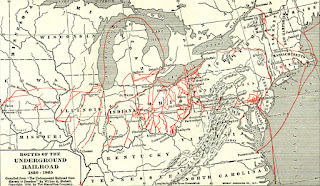

The house also contained a collection of artifacts he had pulled from the rubble of the razed and ruined mansions of the famously rich - those who had rebuilt the city after the Great Fire. They included fireplace mantels, woodworkings, plaques, and other items.

In the grand living room, a massive, ten foot tall wooden candelabra stood in the corner. From a demolished church somewhere, it was so heavy that the floor had to be supported with beams in the basement.

See what I mean? Native Americans, rich barons, religious artifacts, and slaves. Stuff from Egyptian tombs. War relics and weapons.

We should have known.

Although my father loved it, the house didn’t look all that great to my siblings and me. We’d been hoping for a Brady Bunch kind of place – a split-level mid-century modern suburban one, with rust-colored shag carpeting and olive-green new appliances. What child cares about the wonders of lathe and plaster and 14-foot ceilings?

Yes, our new house looked pretty much like a place that could be silhouetted on a Halloween poster. Even if the location scouts didn’t see it.

Besides its size and history, the price was right - and we were a family of seven. Like all good haunted house stories, this one was priced so low that dad couldn’t resist. Umm, hello?

It was filled with leaves and dust and broken glass and rotting wire fixtures. The yard was overgrown with weeds. Layers of paint, decades old, were peeling from the exterior walls. Shingles were missing from the roof and some of the tall windows broken. Pipes were cracked and there was no water. The massive boiler in the basement didn’t work.

None of these obstacles bothered my parents one bit.

And so, my siblings and I explored while the handymen and contractors finished the minimum work so we could move in. I bet they thought it was creepy, too.

When we moved in, it was decided we would share bedrooms. That was fine, since no one wanted to sleep in one of the high-celling rooms by themselves.

It wasn’t long before we learned the house was as haunted as it looked. We didn’t talk about it much, but we all felt it and we all knew it. There were constant noises in the walls – scratching, thumping, bumping. There were often footsteps overhead.

“They’re just animals, probably raccoons,” my father would tell us. “They get inside the walls and they’re hard to get out. It’s normal in these old places.”

Sure, dad.

There was always a collection of mysterious noises past the ceiling, coming from the attic. The attic was an entire third floor. A high-ceilinged space that contained numerous secret rooms and passages outside its inner walls - hiding places of the underground railroad.

An unusually broad, tall window in the attic could be opened and the roof could be traversed in the night to the concealed rooftop rooms under the gables.

None of us – even as adults, would ever be brave enough to explore these hidden areas of the attic. Everyone was afraid of the attic. It didn’t matter if you were 10 years old or 30, it was frightening. Anyone who ventured up the unfinished steps would feel the presence. As if someone else was living up there and that you were uninvited.

Until the day the house was sold, that never changed.

No one wanted to be alone in the house either, especially at night.

Besides the odd noises, there were whispers. Words. Sometimes just beyond the edge of recognition. There were many times when I heard someone speaking to me, whispering, “John…” from over my shoulder. Eventually, I ignored it.

It was one those things you could get used to – if you weren’t alone. And in the 70’s and 80’s we filled the house with all kinds of activity – cats, dogs, friends, and neighbors. We had a green parrot who constantly squawked. There was music from pianos and harpsichords and record players.

In the chaos, the ghosts were probably overwhelmed. But at night, in the silence and darkness, they would return.

As I learn more about hauntings, I realize that what we often accepted as normal was anything but normal. Doors would open by themselves so often that we just ignored it. Items would disappear as if lost – keys, books, coins, and clothes. We accepted it as just another loss among the chaos - shoes, baseballs, and Barbies.

But then we’d find them, days or even years later, in the attic or on the floor of some closet. Or right where we’d thought we’d left them.

We didn’t know what cold spots were then, either. But they were there. In the attic, in the basement, and just passing through a room. We ignored the cold spots, too – the old house had just too many excuses.

Over time, our fear of the basement and attic grew profound. We’d run up or down the stairs, get what we needed, and run back.

We knew.

Once, when we took a flashlight into the far corner of the basement, there was a collection of sticks and rocks and canned food, next to the old coal chute; carefully arranged. It was terrifying to think of someone – or something – alone, in the darkness, arranging those things.

Sometimes, we’d think someone was living in our basement, in the dark. And we would often joke that the unfinished coach house, behind the house, also had someone hiding in residence.

At least that would explain some of the creep factor.

My dad knew more than he let on, though. We came to learn that the house was known, through some anecdotal or historical account, to be haunted.

Visiting with my father in early 2000, he told me that he had been contacted by someone writing a book about America’s most haunted places. He said they asked permission to take photographs of our attic, basement and coach house. He said he turned them down.

But he never said how those writers had come to know what we did.

Until I went to college, I didn’t realize how nice it was to feel safe going to sleep. Or to be alone at home. Because growing up in that old Victorian house, fear was always only a few rooms away.

When my father passed away a few years ago, the estate needed to be sold. So, I bravely moved in, by myself, to begin packing.  After a single night of unexplainable noises and whispers, I moved into a tiny bedroom in what we called the servants’ quarters.

At night, I locked the bedroom door. I had forgotten what it was to be afraid of a house. But when I came back alone, the house decided to remind me.

Day and night, the house tried to scare me. Doors would slam with angry force. On more than one night, I awoke to the slamming of cabinets in the kitchen, banging over and over.

Even in daylight, it kept up. There were sharp, loud smashing sounds in certain rooms. Noise like an entire china cabinet had toppled. Or that a stack of ceramic tiles had been dropped from the ceiling. I’d rush into the room - and everything would be normal.

Of course.

At times like that, I’d call my sister. “They’re at it again. It’s so annoying.”

“Seriously? Just tell them to stop,” she’d say.

Some nights, there would be a persistent knocking on my bedroom ceiling, which wasn’t even below the attic – but rather beneath the hidden rooms on the roof. I’d pop in my earbuds and listen to music, ignoring them.

But the whispering voices – they were the worst.

Just when I’d forget all about the creepiness and simply open a door, the voices would whisper. Not just one voice, but many. It wasn’t the swoosh of wind or a creaky hinge, but actual whispered voices. Though indiscernible, they sounded like a faint audio track of 10 people whispering at once.

On a few especially bad nights, I almost dialed 911.

Both times, the attic sounded like it was hosting a deathmatch event. There were crashes and muted voices. Loud bangs and thuds that sounded like people were wrestling. And it would go on and on. Once, I stood at the bottom of the attic stairs and recorded the sounds.

My sister and I decided that it was simply impossible that a fight was really happening in the attic. So, I would shout up at them from steps, demanding they stop. And they did.

But it was always something.

Like when I stepped out the back door to get something from my car, only to find that the back door had been locked – with a key – from the inside. I stood there, in the freezing winter air, cursing at them and wishing I was back in my safe apartment back in Florida.

On the last day before we moved out, my sister and I stood at the top of the front stairs. She suddenly turned her head asked me, “Did you change the tune of the doorbell?”

“What? Why would I do that? And I don’t think that’s even possible.”

“Shhh. Did you hear that?” She whispered. “It’s a piano.”

I didn’t hear anything. After a while, we resumed packing the box. A few minutes later, I heard it.  Someone was clearly playing a piano downstairs.

My sister and I knew there were no pianos in the house. They had long been moved.

I couldn’t wait to pack that last box and leave. When we walked out the door for the last time, we both wondered what stories the new owners would have to tell.

Just like I did, here today.


Friday, September 22, 2017

Out-boxed


"Look, John," she told me, there in her office, on that muggy and rainy afternoon in Florida. "You live inside your head."

Then, I wasn't sure what she meant.

From the window, the palm fronds were waving in the summer storm. The tropical rain falling in a typical Florida torrent. Dark, low skies lurking just over the Live Oaks; the rain blurring everything like a dense fog.

The summer storms always transformed Florida, they changed it, sometimes into a place that was more like Jurassic Park. Like Neverland. Like a Universal Studio set. For me, it was this transformation that felt like escapism. It compelled imagination.

Through the rain and the sound, through the furious otherness, one could imagine sailing on The Ghost, as Humphrey van Weyden in Sea Wolf, toward Pitcairn Island. Or on Bligh's Bounty, at the helm, fighting the furies of the ocean, looking for the whale.

For this I knew - I liked the rain better than the sun.

"John," she advised, "you can't stay in there forever. I want you to meet people, maybe take some chances." She had told me this before, in other ways, that I couldn't be content to push feelings and memories into the background; where they could become lost and harmless and impotent.


The other night, I visited friends in the city, in their eclectic urban condominium. I hadn't seen them in over a year.  Their home was astonishingly filled with the collectibles of a museum. Everywhere, there were tributes; to literature, film, architecture, and history. I could have looked through their shelves and walls for hours.

In the kitchen, on their deep charcoal wall, was a watercolor painting of a Polar Bear. My friend swept her arm out across the wall and cheerfully said, "And doesn't this look so wonderful here?"

At first, I didn't recognize or remember it. But I had painted it and gifted it to them some years before. It was puzzling. It had somehow fallen into the outbox of my mind.

Just like so many other things.

She was right - I was living in my mind. And it was masterful at protecting me, hiding things from me. Sorting and filing and filtering.

I eventually came to understand that the other side of perception and sensitivity - of tuning into music and feelings, of knowledge and words and the metaphysical self - was a vulnerability.  And to me, it's still dangerous.

But I'm trying. When I looked at the Polar Bear, my friend's beaming smile told me that it was OK to remember.

And that's one of the reasons I write these posts. I need to start keeping some of the sweetness and the music from getting pushed into the outbox with everything else.

I can't so easily forget the Polar Bear, lost to Pitcairn Island.

Maybe I need to quit wishing for rain every day.


Friday, September 15, 2017

The hurts that heal

Wish you were here, I wish you could see this place
Wish you were near
wish I could see your face
The weather's nice, it's paradise
it's summertime all year
and some folks we know, they say hello
I miss you so
Wish you were here


I still have a faint mark on my finger - where my older sister nicked me with a butterknife.

I was no older than seven or eight, and we were in the bunkbed at our lake house. From the top bunk, I'd reach down, trying to pull her blankets off or pull her hair or grab her book.

But one time, she was ready for it. She told me later - OK years later - that she was sorry. The crying and ensuing punishments are just faint memories, unimportant in the cosmic time-stream. But I do remember the band-aid. It was way too big for my seven-year-old pinkie and didn't really help.

That butterknife cut left a small, almost indiscernible scar. And I wouldn't trade it for anything in the world.

Years later, my sister would ask me to show her. Or to show it to one of her boys. Or a niece or nephew.

Sometimes I'd get a hug. Me, as a man in her kitchen, her children and dog watching, bewildered by sympathies from long ago. But her arms around my neck were not for apology or sympathy; they were for the love of our shared childhood; of secrets and memories only we could know.

And that faint scar was a reminder.

A reminder of the days of autumn, when we shared a bunkbed. When we listened to the crickets through the open windows and the muted voices of our parents and grandparents through the bedroom door. A reminder of 1976 and 1977, of summer mornings, riding our bikes to swim lessons at Memorial Park; towels around our necks, bike locks in our baskets. A crumpled dollar bill in someone's pocket.

We were as free as we would ever be - even though we didn't know then. And wouldn't, until many decades would pass. Until then, we would come to know - and share - the joy and sorrow that life would bring us, once we passed beyond those blissful summer days.

Memories that only we could understand. Why we'd hug tightly, there in her kitchen, amidst all those other satellites that circled and filled her life. She would become the center of everyone's universe - just like she had been for me, for as long as I could remember.

She was summertime all year. She brought a kind of beauty into the world like a sunset brings to a beach. Like the crickets bring to a summer evening. Like pumpkins and apples in the fall.

Her kindness was so radiant, her soul so beautiful, that only she could raise a butter knife at me as a father of four and threaten me upon the slightest infraction. She'd be making a sandwich and hear me say something. "Don't think I won't," she'd laugh.

And this afternoon, I wished she was here. I wished that she was still the center of my universe.

I cried and felt better. I looked at my finger and I thought about the hurts that heal.

And I thought about others that seem like they never will.

Citations:
Wish you were here 
Released January 11, 1999
Format CD Single
Length 4:00
Label Mercury Nashville
Songwriter(s) Skip Ewing
Debbie Moore
Bill Anderson
Producer(s) Carson Chamberlain

Wish you were here - Mark Willis

Sunday, September 3, 2017

Roy and the Sky Writers

"I haven't seen that before," I said, looking at the rainbow pattern. "You know, those are kinda cool."

I thought she looked wonderfully Bohemian; ready for an adventure in a vintage travel trailer. To Oregon - or down to Baja and beyond. She could fill the soul of a VW van; puttering down the A-1A, all musical and happy and free - and free some more.

They reminded me of things like tie-dyed peace signs, just like the yellow and blue neon hair of that lady selling her shirts at the farmer's market.

They made me think of America, singing "Ventura Highway."
Ventura Highway
Ventura Highway
In the sunshine
Where the days are longer
The nights are stronger
Than moonshine
You're gonna go I know 

So simple and so complex, the rainbow. God's perfect PowerPoint projection of the palette he used to create the living experience. The geeks tell us it's just the visible spectrum of light. The height of wavelengths that shine into our retinas, our rods and cones turing them into colors inside our minds.

But in my Bohemian, tie-dyed worldview of the rainbow? Well, you'd need to know about the sky writers. Roy, G, and Biv.

Roy is the cowboy. On his palette are the pigments of dusty, rusty trails winding through the layered rock in Sedona. Hues infused with the magic of the Apache and Hopi. Like the faded rust of Zuni handprints in high caves.

Roy is all about scarlet sunsets. The tanned leather of rawhide and rein. And he rides a Chestnut brown gelding that kicks up Bell Rock dust, which floats into the sky, bending the spectrum with a cosmic lens that reminds us of the warmth and safety of Roy's campfire.

G is an emerald child, born among the flowers in the spring, among the vibrant green hues that signal new beginnings and innocence. Painting in so many hues and verdant pigments that they each seem just beyond clarity. Tones that breathe, that soothe, that flow. Colors that always - and only - exist between morning and night.

The emerald girl's colors are of the living, never burning and never freezing.


And Biv. To me, he's really Bob Dylan.

Dylan, a soul gifted to the world every few generations, whose role it is to paint the sky in his own special palette. Of chords and ballads that provide color for the most delicate and mysterious of wavelengths.

Colors of the guitar and the harmonica; of words - sometimes in sad, deep indigo tones. Sometimes in peaceful, soulful blue hues. And sometimes in the colors of the world in between; those of mesmerizing and mysterious violets. They are depth and wonder.

His words, his music. Blue, Indigo, violet.

Bob and his "Tangled up in Blue." Nobel-worthy tints.

But all the while I was alone
The past was close behind
I seen a lot of women
But she never escaped my mind, and I just grew
Tangled up in blue

And that's how we remember the rainbow. In my words.

"You should keep those," I told her.

I was thinking about all of these things. But I couldn't express why. Too many hues, too many reasons.

I was thinking about the cowboy, the emerald girl, and Dylan.

And a vintage travel trailer.


Wednesday, August 2, 2017

"What you can't not do"


"I do not pretend to understand the moral universe; the arc is a long one, my eye reaches but little ways... I can divine it by conscience. And from what I see I am sure it bends towards justice.”

Theodore Parker, theologian and abolitionist, wrote those words as part of an 1850 monograph.

His almost alchemical words were so perceptively poignant that their echoes could be heard in the underlying tenants of Abraham Lincoln’s epic address at Gettysburg.

Words so powerful, so profound, that more than a century later, Martin Luther King would famously cement them into history when proclaiming that the fight for civil rights would never be lost - could never be lost. As evidence, King avowed, “The arc of the moral universe is long, but it bends toward justice.”

Indeed, this metaphysical arc, as it bends across the universe, is inescapable. The pull of its path, infinitely more powerful than you might think, redirects all things toward justice.

It is powered and governed, cosmically, by what can only be described as a kind of karma. In driven deeds, inherited debts and eternal imprints.

I believe, as Parker did, that souls move along the arc, ever heading, ever yielding, towards justice. That you can no more alter its course than ride a comet traveling 298 miles per second and steer it by windmilling your arms convincingly in the vacuum of space.

Our world has endured times of inexplicable and disturbing injustice. Like the dark, bleak days of World War II. Then, existential philosopher and Nobel Prize author Albert Camus, writing from the battlefield, urged us to believe that tragedy should never turn to despair. Himself traumatized by the carnage, he wrote that the world would eventually recover their humanity, heal, and bend back toward normalcy – and justice.

Camus urged that no matter the tragedy, the world will heal. That justice will prevail.

And it does. It has. It will.

Perhaps by the Hand of our God. Every holy religion – Christianity, Buddhism, Hinduism, Islam, Taoism, Confucianism and others – espouses the basic tenant of undeniable justice. The Buddhist teachings say, “Hurt not others with that which pains yourself or in ways that you yourself would find hurtful. One should seek for others the happiness one desires for one’s self.”  Many of these religions hold varying beliefs on the purpose of the reincarnated soul, almost always associated with justice.

Sometimes, we are offered that it is ours to create the boundaries of righteousness. We may be presented with choices: faithfulness or infidelity, honesty or duplicity, happiness or sacrifice, affirmation or hurt, truth or manipulation. Love or hate.

In these moments, we should choose carefully. We will be pulled toward the path, across the long arc. But the universe is patient. You will carry your choices. Own them to try again.

From Parker to Lincoln to King. From Ghandi to the Dalai Lama. The words are true. The arc is long and bending to no one. For everyone.

It has always been the time to choose "what you can't not do." To strike a path toward freedom, equality, hope, truth, fairness and protection. Selflessness.

Perhaps I can describe it like this. Lay your path as if it were an underground railroad. Of any kind, any length. Of any material. For any noble justice. Build it. Own it.

Ultimately, the karmic force of the universe is upon you, pushing you along the arc - towards justice.

So do what you can't not do.

Nobody gets too much Heaven no More

What if I told you That the best days are summer days – And that when I think of you, I remember  Pedaling down Longwood Drive, on our Schwi...